

Your classmates worry about exams and due dates. You’re calculating whether you can afford gas to get to campus, wondering if you can shower at the gym before your 8:00 a.m. lecture, or figuring out which friend’s couch you can crash on this week without wearing out your welcome.
Housing instability forces you to solve problems most students never have to think about, all while keeping up with the same coursework. The 9% bachelor’s degree completion rate for homeless students isn’t a reflection of ability. It’s a reflection of how many barriers stack up when your basic needs aren’t met.
But students who know what resources exist and how to access them beat those odds. Here’s what you need to know.
What “Homelessness” Actually Means for Students
Homelessness isn’t limited to living on the street. Under the federal McKinney-Vento Act, students qualify as homeless if they lack fixed, regular, and adequate housing. This includes living in shelters, cars, motels, or “doubled up” with relatives or friends because there’s nowhere else to go.
This distinction matters because it determines your eligibility for support services. Unaccompanied youth (those navigating life without adult support) face even higher barriers to housing, education, and financial aid. Schools are legally required to identify these students and connect them with services.
The Scope of the Problem
The numbers reveal how widespread this issue has become:
In the 2022–23 school year, over 1.37 million students in U.S. public schools were identified as experiencing homelessness, about 2.8% of all enrolled students. That represents a 14% increase from the prior year and more than double the count from two decades ago. Most aren’t in shelters; roughly three-quarters are “doubled up” with another household after losing their own housing.
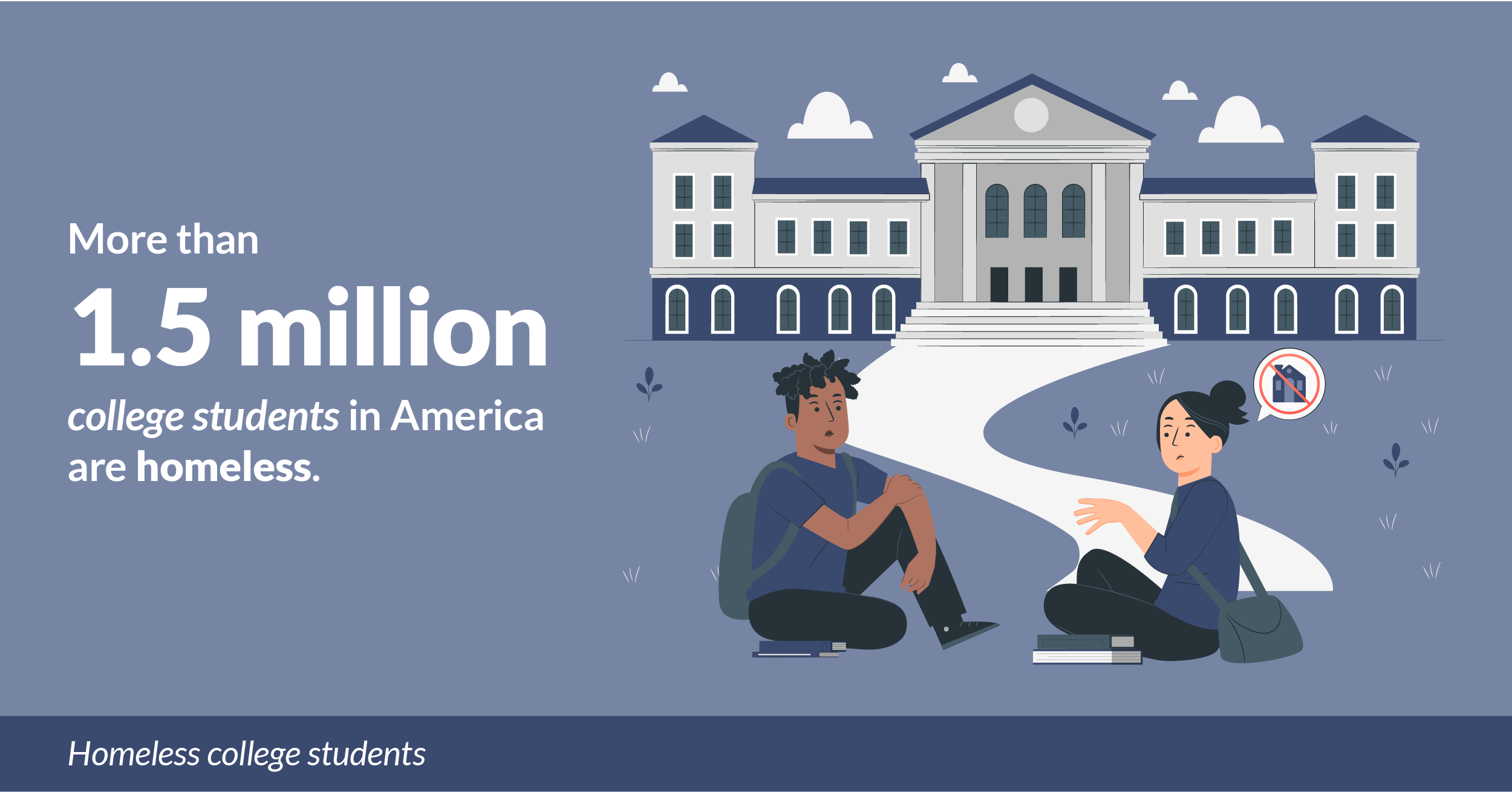
Once students reach college, homelessness doesn’t disappear, it changes shape. About 14% of community college students experienced homelessness in the past year, with 11% of four-year students reporting the same. Nearly half also face food insecurity. Yet fewer than 20% receive any housing assistance.
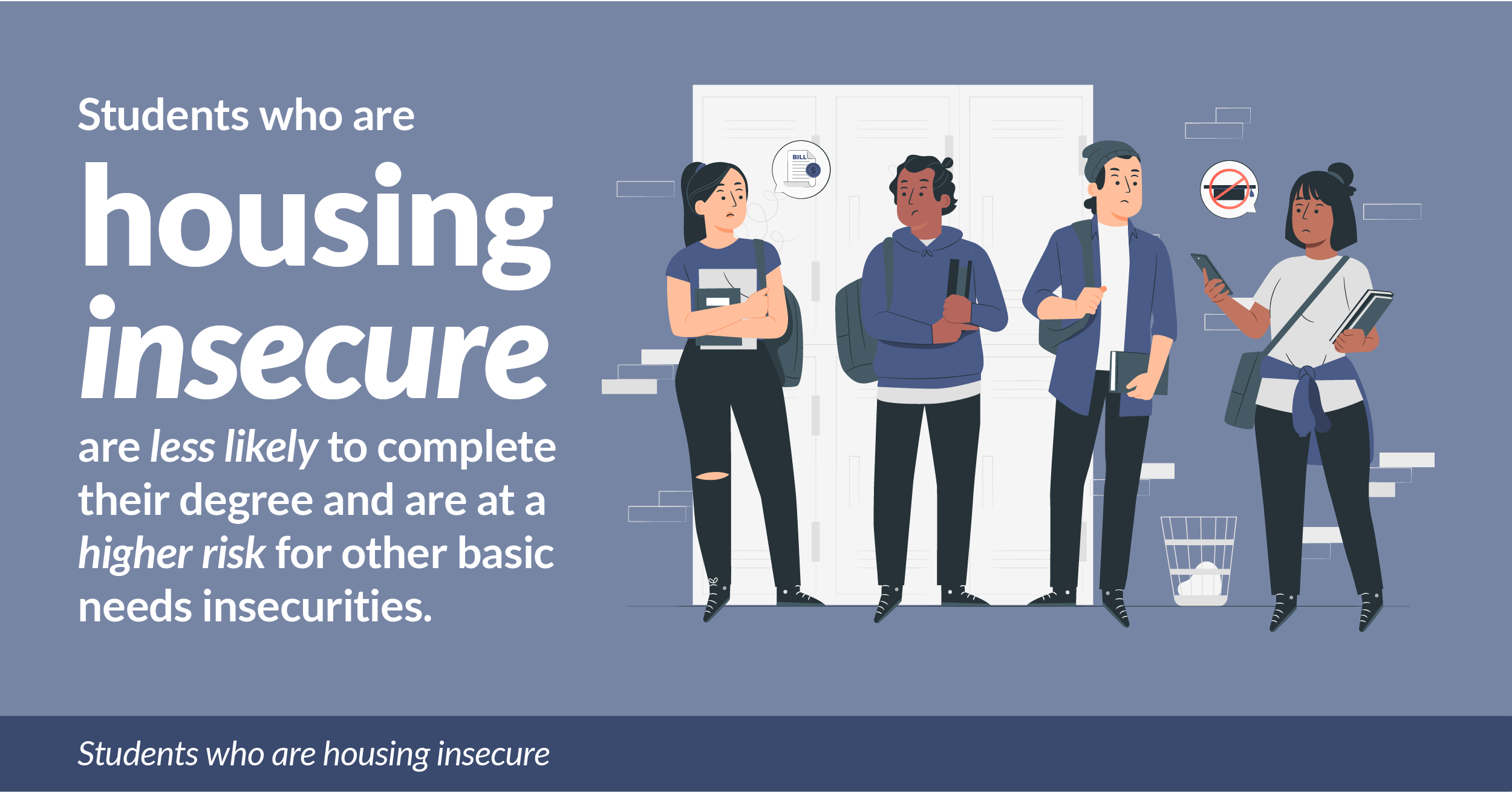
The graduation gap is stark: only about 9% of homeless students complete a bachelor’s degree within six years, compared to much higher rates for housed peers.
Why Homelessness Makes College Harder
Understanding the specific barriers helps you anticipate and address them:
- Financial pressure beyond tuition. Homeless students often juggle transportation, food, books, and work simultaneously. When you’re working to cover basic needs, time for studying shrinks dramatically.
- Academic strain from instability. Unstable housing means unstable schedules. Making it to class on time, studying consistently, and participating in group projects all become harder without a reliable place to sleep and prepare.
- Health and stress impacts. Housing insecurity correlates with inadequate healthcare access and elevated levels of stress, anxiety, and depression, all of which affect attendance, focus, and performance.
- Aid documentation barriers. Unaccompanied homeless youth need specific documentation each year to qualify for federal aid. If colleges or FAFSA systems don’t recognize your situation, you may lose critical support.
Practical Steps Toward Success
Going to college without stable housing is challenging, but it doesn’t have to derail your goals. Students who access support systems can and do succeed.
- Use the McKinney-Vento Act to your advantage. This federal law can help you qualify as an independent student for financial aid purposes, removing the requirement to report parental income. Contact your campus financial aid office and ask specifically about McKinney-Vento provisions.
- Connect with campus basic needs coordinators. Many colleges now have staff dedicated to helping students access emergency housing, food pantries, and other support. These coordinators can navigate bureaucracy on your behalf. If your school doesn’t advertise these services, ask the Dean of Students office directly.
- Seek out nonprofit guidance. Organizations like SchoolHouse Connection provide advocacy, resources, and guidance specifically for students experiencing homelessness. The Youth.gov housing resources portal also consolidates federal and state support options.
- Build your support network strategically. Communicate openly with academic advisors about your situation, they can help with extensions, course load adjustments, and connecting you to resources. Peer support matters too; other students who’ve navigated similar challenges can offer practical wisdom.
- Prioritize mental health. The stress of housing insecurity compounds academic pressure. Campus counseling services are typically free for enrolled students. Using them isn’t weakness but a practical tool for staying in school.
Planning for Breaks and Summer
One challenge unique to homeless college students, what happens when dorms close for winter break or summer? Planning ahead is essential.
Some colleges offer year-round housing for students who have nowhere else to go, ask your housing office about break housing waivers or summer stay programs. If your campus doesn’t offer this, connect with your basic needs coordinator early (at least a month before break) to explore transitional housing options, host family programs, or emergency funds for temporary rentals.
Don’t wait until finals week to figure this out. The students who navigate breaks successfully are the ones who start asking questions early in the semester.
You Can Do This!
Facing college without stable housing is genuinely hard. The data confirms that homelessness creates real barriers to completion. But the data also shows that students who access available supports can succeed.
Asking for help is not a sign of weakness; it’s a strategic step toward finishing strong. By using available resources, staying connected with campus staff, and breaking your goals into manageable steps, you can move through college with resilience and build the stable future you’re working toward.
Resource Links
Sources
- What Can McKinney-Vento Act Data Reveal About Youth Homelessness?
- Homeless Student Statistics
- Youth Homelessness and Higher Education: An Overview
Additional Resources
Get Help
- State Laws Supporting College Students Experiencing Homelessness
- Affordable Rents for College Students
- Get Emergency Housing
- Need Housing Assistance?
- 1-800-Runaway
- National Domestic Violence Hotline
- National Human Trafficking Hotline
- Supplemental Nutrition Assistance Program (SNAP)
Government Resources
- U.S. Department of Education Report on Student Homelessness (2020-23)
- Youth.gov: Homelessness and Housing Instability
- Oregon McKinney-Vento Resources
Research & Policy
- ERIC: Academic Outcomes for Homeless Students
- Hungry and Homeless in College (Goldrick-Rab)
- NIH: Housing Insecurity and Student Health
- Bipartisan Policy Center: Housing Insecurity Among College Students
- Learning Without a Home: Will a Housing-First Approach Work on Campus?
- College Student Homelessness: A Hidden Epidemic
- Community College Students Experience with Homelessness and Housing Insecurity