
Social Work and Community Development Degrees
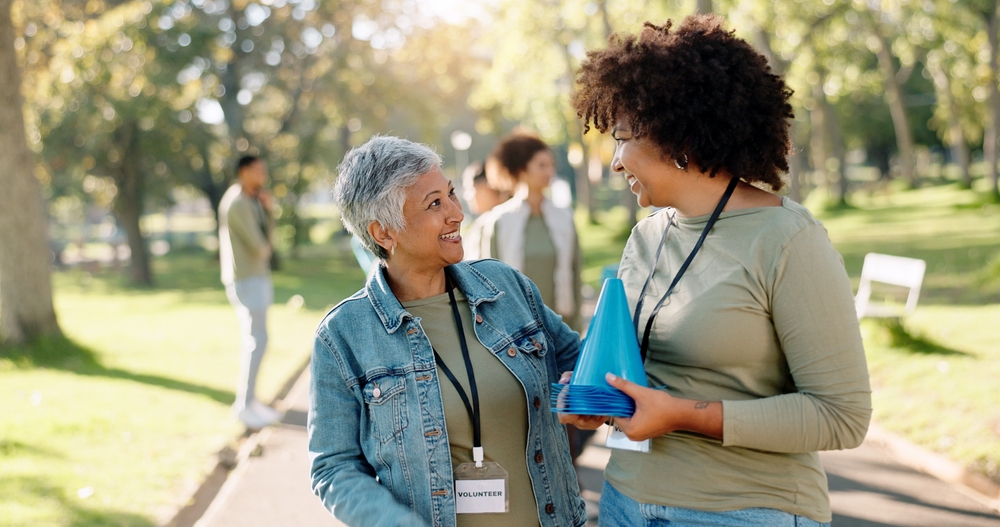
Do you feel passionate about helping vulnerable, oppressed, or marginalized people in society? A degree in social work and community development gives you unique opportunities to create meaningful change for individuals and communities.
Your choice to pursue a degree in social work opens doors to excellent credentials. Students who start with a BSW in social work or look at advanced options benefit from programs that combine historical examples with state-of-the-art practices. These programs draw from the experiences of individuals and communities that drive social change.
Social work careers offer promising prospects. Community development social workers can earn $45,000-$95,000 yearly depending on their experience and location. Dual degree programs provide great value with 16 shared credits between programs. Students may also receive a 33% tuition reduction for MSW credits. These professionals shape policy decisions at local, state, and federal levels. The career path rewards you both financially and socially.
Would you like to find what this educational trip involves? Let’s look at seven key facts you should know before starting this meaningful career path.
Understanding the Dual Nature of Social Work and Community Development
These two complementary fields form the foundation of any degree in social work and community development.
Social work is a practice-based profession and academic discipline that brings social change, development, social cohesion, and strengthens people. Social work operates on principles of social justice, human rights, collective responsibility, and respect for diversities. Its main goal helps boost human well-being and meet simple human needs, especially for vulnerable, oppressed, and impoverished populations.
Community development lets community members get support to identify and take collective action on issues that matter to them. You’ll help equip community members to create stronger, more connected communities as a practitioner in community development. Community members’ knowledge and input become essential at every stage of development because they’re the experts in their own lives.
Each field has its own professional associations, practice guides, and historical developments, sharing core values of empowerment and social justice.
How the two fields intersect
Social work’s defining feature focuses on individual well-being within social contexts and society’s welfare as a whole. This matches community development’s focus on collective action and systemic change.
You’ll see this connection in how both disciplines work with people and structures to tackle challenges and boost well-being. Social workers often cooperate with residents, organizations, and policymakers to tackle critical community issues like affordable housing, education, healthcare access, and employment opportunities.
These fields share international definitions despite their differences. Both practice-based professions promote social justice, human rights, and strengthen people. Social work’s profession has also partnered in community-based efforts across disciplines since the early 20th century.
The relationship between these fields hasn’t always been smooth. Mendes points out that community workers often notice social work supports individuals within unequal systems rather than using grassroots approaches to start change. All the same, both fields want to transform lives—they just use different methods.
Why this dual focus matters
Complex social issues need complete solutions that combine social work and community development. Practitioners who blend both disciplines’ strengths can address:
- Immediate individual needs through direct support and counseling
- Underlying systemic issues through policy advocacy and collective action
- Community-wide challenges through participatory approaches and capacity building
A degree in social work and community development prepares you to direct these connected areas. The BSW in social work teaches simple skills for individual case management, while community development training gives you tools to create broader societal change.
This combined knowledge opens more career opportunities. Graduates who know both areas expand their expertise and ready themselves for roles across multiple fields. Many more doors open, particularly in areas needing cross-disciplinary approaches like child welfare, community health, or disaster resilience.
Dual degree programs offer specialized training that recognizes how these disciplines complement each other if you want advanced education. You can count some graduate credits toward both degrees, creating a quick path to graduation. This approach saves time and might cut costs through shared coursework.
Programs like Ohio University’s MSW curriculum shows this combined approach, giving students knowledge and tools to lead community development initiatives that strengthen communities toward self-reliance and resilience.
Professional practice grows stronger with this combination. Research on Public Health Social Work (PHSW) graduates shows this integrated point of view promotes “that ability to question… a skill that the dual-degree people really have”. These professionals represent what one graduate called “the new breed [of social workers]… building up immense experience; we are the future”.
This dual focus lets you work at both micro and macro levels, surpassing traditional boundaries to create lasting and effective interventions for individuals and communities alike.
Educational Pathways: From BSW to MSW and Beyond
Social work education offers several paths. Each path can shape your career growth differently. You’ll find options from basic undergraduate studies to specialized graduate programs that help you plan the best route to reach your career goals.
A Bachelor of Social Work (BSW) builds the foundation you need for professional practice. The Council on Social Work Education (CSWE) accredits these programs that blend theory with hands-on experience. Students typically need four semesters to finish all major requirements. This includes 38 credit hours of coursework and 12 credit hours of field instruction.
Field education is the substance of BSW training. Students must complete 512 clock hours under professional supervision in agency settings. This structured experience helps you develop practical skills and apply theoretical concepts in real-life situations.
BSW programs help students develop general practice skills. You’ll gain these essential abilities:
- Understanding how people behave in social environments
- Analyzing social welfare policies and their effects
- Becoming skilled at intervention methods with clients of all types
- Conducting simple social research to solve problems
- Using ethical principles in professional practice
A BSW from a CSWE-accredited school opens doors to entry-level positions. It also prepares you for graduate education. Many universities design their programs so graduates can naturally progress to master’s-level education through faster paths.
Advanced standing MSW programs
Advanced Standing Master of Social Work programs give BSW graduates a significant edge. These faster programs recognize your previous social work education. You can earn your MSW much quicker than traditional methods.
Students in advanced standing programs need only 36-45 credits instead of the usual 60-72. You can graduate in 12-24 months rather than taking two to three years. Some universities let full-time students finish in 12-16 months, while part-time students may take 20-24 months.
You need these qualifications for advanced standing:
- A BSW from a CSWE-accredited program
- Recent BSW completion (within 5-7 years, depending on the school)
- A minimum 3.0 GPA (some schools want 3.3+ in social work courses)
- At least 400 hours of BSW field experience
Advanced standing programs save time and money. They let you start advanced practice sooner and focus on specialized areas right away. These programs maintain high standards and field requirements just like traditional MSW programs.
Dual degree options and benefits
Dual degree programs blend MSW studies with other fields. Students can gain expertise in multiple areas while making their education more efficient.
Each degree program needs a separate application. Students receive two diplomas when they graduate. Though challenging, these programs offer great value through shared courses and expanded job opportunities.
Popular combinations include:
- MSW/JD (Law) – Creates leaders in law and social policy who can drive system changes
- MSW/MPH (Public Health) – Tackles health access issues at clinical and policy levels
- MSW/MBA (Business) – Builds management skills for social service organizations
- MSW/MCP (City Planning) – Studies how physical, social, and economic systems work in cities
- MSW/MDiv (Divinity) – Combines social work with religious training
Dual degrees expand your knowledge and career options. They give you viewpoints that exceed single-field boundaries. Many courses count toward both degrees, saving time and money.
Schools offer flexible schedules for dual degrees. Full-time students often finish MSW/MPH programs in three years. Part-time students might need four years. This flexibility lets you match your education to your life without losing program quality.
Core Curriculum and Competencies You’ll Develop
A degree in social work and community development gives you strong theoretical knowledge and practical skills. Your classes will shape your professional identity and prepare you to work effectively in different settings.
The core curriculum covers both theory and practical methods. BSW programs include these foundation courses:
- Human Behavior in the Social Environment
- Social Welfare Policy and Services
- Research Methods in Social Work
- Social Work Practice with Individuals and Families
- Community Organization and Development
- Diversity and Social Justice
These courses give you essential knowledge and introduce micro and macro practice views. Advanced courses help you understand specific areas better. BSW students complete approximately 38 credit hours of coursework and 12 credit hours of field instruction.
MSW programs build on these basics with specialized tracks. Students can focus on areas like clinical practice, policy advocacy, and community organization. The curriculum helps you develop skills in both individual help and community-based work.
Community development courses teach you about asset mapping, planning with communities, and ways to get people involved. These skills add to traditional social work education by focusing on group action and system-wide changes.
Competencies in ethics, justice, and diversity
Your degree program helps you develop key professional skills. The Council on Social Work Education (CSWE) lists nine core competencies that all approved programs must teach:
- Demonstrating ethical and professional behavior – You learn to make ethical choices based on professional standards and understand how personal values affect your work.
- Advancing human rights and social justice – Programs help you understand system-wide unfairness and develop ways to fight social injustice.
- Engaging diversity in practice – You learn to be culturally humble and aware of how diversity shapes people’s lives.
- Research-informed practice – You learn to look at research carefully to guide your work.
- Policy practice – You learn to create and study policies that help society.
Other skills focus on connecting, assessing, helping, and evaluating at different levels. Programs measure these skills through assignments, field reviews, and final projects.
Programs now include trauma-informed approaches and anti-oppressive methods as basic parts of learning. This change shows how important structural factors are to individual and community wellness.
Hands-on learning through fieldwork
Field education is central to social work learning. BSW students complete around 400 field hours, while MSW students need about 900 hours in different places.
You’ll work with various clients under professional guidance. These placements happen in:
- Community mental health centers
- Family service agencies
- Schools and educational institutions
- Housing and homelessness programs
- Advocacy organizations
- Government agencies
- Healthcare settings
Field experiences come with learning agreements, regular supervision, and formal evaluations. Many students take classes while doing their field work at the same time.
Classroom learning and field practice work together. Theory guides your practice, and your experiences help you understand theories better. This back-and-forth develops critical thinking skills you need to work in complex social situations.
This complete curriculum helps you develop technical skills and a professional identity based on service, social justice, dignity, relationships, integrity, and competence. You’ll be ready to help both individuals and communities face their challenges.
Career Opportunities and Job Titles to Expect
A degree in social work and community development opens up diverse career paths in multiple sectors. Your specialized education prepares you to take on effective roles that address individual needs and systemic challenges.
Roles in community organizing and policy
Community organizing and policy positions create systemic change through advocacy, program development, and community involvement. You’ll work to improve systems and institutions that shape people’s lives, including healthcare, education, and government agencies.
Macro social workers in this category handle these key responsibilities:
- Program development and management
- Community organizing and outreach
- Research and program evaluation
- Advocacy and policy development
- Coalition-building and political advocacy
Professional titles in this field include community organizer, program manager, policy analyst, advocate, and grant officer. Allison Gilbreath, senior director of policy and programs, says “I’ve never had a student not be able to find a job. In fact, it’s often the reverse. There are so many few of us that we often have options”. Her statement explains the steady demand for skilled professionals.
These positions let you tackle large-scale challenges like social justice, policy development, and advocacy for marginalized communities. Your work could involve creating community programs that address food insecurity, expand access to affordable housing, or reform criminal justice systems.
Clinical vs. macro-level careers
The difference between clinical and macro practice represents one of the most important career path decisions after getting your degree. Clinical social workers deliver direct services to individuals, families, and groups. They conduct assessments and provide therapeutic interventions. Their work spans schools, correctional facilities, hospitals, mental health clinics, and private practices.
Macro social work includes roles that help clients access services, manage programs, and improve community-benefiting policies. The main difference lies in scope—clinical practitioners focus on individual treatment, while macro practitioners want systemic change.
Salary ranges differ between these paths. Clinical social workers earn slightly more on average. Macro social workers in local government agencies and educational services earn median annual wages of $64,550 and $62,980. This is a big deal as it means that the median for all social workers. Top earners in macro roles can reach $132,500 annually.
Both career tracks need similar educational foundations, usually an MSW degree, though with different specializations and licensure requirements.
Emerging roles in nonprofit and government sectors
Your degree creates pathways into expanding roles in nonprofit organizations and government agencies. Nonprofit sector jobs are especially varied, with positions from executive directors to development officers and program coordinators.
Government positions feature community development representatives, economic development officers, urban planners, and sustainability coordinators. These professionals implement housing policies, tackle homelessness, improve economic conditions, and ensure equitable development.
Economic development roles focus on attracting businesses, supporting local enterprises, and creating job strategies. Project managers lead specific development initiatives and ensure they meet community needs while staying within budget.
Modern positions blend clinical and macro skills more often. Hybrid roles like program directors in mental health agencies or policy advisors with clinical experience help professionals shape policy decisions with real-life client knowledge.
Community development graduates work as executive directors, program managers, organizers, planners, grant officers, and researchers. They serve in health care, disability services, children and youth services, community centers, and more. These opportunities exist in organizations of all types at local, state, national, and international levels.
Fieldwork and Real-World Experience
Fieldwork is essential to your social work education. It connects what you learn in class with hands-on experience. Your academic experience will give you well-laid-out ground experiences to build professional skills under expert guidance.
Importance of internships and practicum
Social work education’s signature teaching method is field education. You’ll apply what you’ve learned directly to real-life situations. This hands-on learning takes you beyond textbooks. You’ll work with clients and communities while getting professional guidance.
The Council on Social Work Education (CSWE) sets specific fieldwork requirements. BSW programs need a minimum of 400 supervised field hours. MSW programs require at least 900 hours of supervised field instruction. These requirements show how vital practical experience is to develop skilled practitioners.
Your last semester usually has block placements at social service agencies four days a week. The fifth day focuses on integrative seminars. This setup lets you process your experiences with peers and connect theory to practice while reflecting on your growth.
Field practicum benefits include:
- Professional networking with potential employers
- Career exploration in practice areas of all types
- Resume-building experience showing your skills
- Using classroom knowledge with different client situations
Types of organizations you’ll work with
Working in different field settings expands your understanding of social work. Universities partner with hundreds of agencies at local, national, and international levels. This creates a rich variety of learning experiences.
Field placements happen in many settings, from healthcare to government agencies. The Veterans Administration trains about 1,500 Master of Social Work interns yearly across 230 affiliated graduate schools. Other common placement settings include:
- Community mental health centers and hospitals
- Family service agencies and domestic violence programs
- Schools and educational institutions
- Housing and homelessness organizations
- Advocacy and policy organizations
These strategic collaborations ensure quality learning experiences. Agencies become partners when they line up with educational program values, commit to ethical social work, and can support student learning. Students bring fresh points of view that help shape future practice at these organizations.
How fieldwork shapes your career readiness
Structured application of knowledge through field experiences reshapes your professional growth. You’ll develop key skills under supervision – interviewing techniques, critical reflection, analytical thinking, and report writing.
Research-based placements are a great way to get practice skills by developing methodological approaches to complex social problems. This mix of research and practice helps you see research as a vital tool that can “catalyze change and advance the goals of building a more sustainable, socially just, and democratic world”.
Regular supervision plays a key role in your development. The supervisor-student relationship often grows into mentorship that encourages trust, confidence, and research abilities. This guidance helps you handle challenging experiences and direct ethical dilemmas that come up in practice.
Field experiences also shape career paths by helping you identify your strengths, interests, and priorities. Many graduates find jobs in their placement organizations because these experiences build professional connections that lead to job opportunities.
Field work helps you balance personal and professional identities. It boosts confidence, self-awareness, reflection skills, and professional interactions with various stakeholders. These skills keep growing throughout your career.
Funding Your Degree: Scholarships and Assistantships
Getting financial support for your social work and community development education needs careful planning. Many funding options can help reduce costs and make your education more affordable.
MSW and MSCID scholarship options
Professional organizations are a great way to get scholarship resources for social work students. The NASW Foundation offers several notable scholarships. The Consuelo W. Gosnell Memorial Scholarship provides up to $4,000, while the Verne LaMarr Lyons Memorial Scholarship offers $5,500 for MSW candidates who want to serve Latino/Hispanic or Black communities respectively. Students need NASW membership and must maintain a minimum 3.0 GPA.
Universities have strong scholarship programs. The University of Minnesota Duluth’s Department of Social Work helps about 60% of master’s degree social work students get at least one scholarship. Beyond academic merit scholarships, institutions give specialized awards based on:
- Interest in specific practice areas (pediatric social work, oncology)
- Steadfast dedication to underserved communities
- Demographic criteria or diversity initiatives
- Geographic location priorities
Community development programs like Andrews University’s MSCID give a 50% tuition discount that works with other scholarships. International students who study community development can get special funding through programs like Fulbright Scholarships or the American Women for International Understanding grants.
Graduate assistantships and stipends
Graduate assistantships help fund education while providing professional experience. These positions need 10-20 hours of weekly work and give stipends plus partial or full tuition benefits.
Research or teaching responsibilities make up most assistantships, where students work directly with faculty members. The University of Northern Iowa points out that these positions help many full-time graduate students who would otherwise study part-time. Some institutions now pay assistants up to $27.95/hour.
Beyond regular assistantships, special stipend programs support students in high-need areas. These workforce development programs feature:
- Financial incentives with service commitments
- Specialized curriculum and placements
- Post-graduation employment requirements
Support amounts vary substantially, ranging from $11,500 per semester to $23,000 per academic year.
Loan forgiveness and public service programs
Public Service Loan Forgiveness (PSLF) is a vital option for social work graduates. Your remaining federal student loans might qualify for forgiveness after 120 qualifying monthly payments while working full-time at eligible government or nonprofit organizations.
Licensed clinical social workers can get up to $50,000 through the National Health Service Corps (NHSC) Loan Repayment Program. This requires a two-year commitment to work in underserved communities. Additional loan repayment funds come through continuation contracts.
State programs expand these options. California gives up to $50,000 yearly for a two-year commitment. Michigan’s program offers up to $300,000 over ten years for clinical social workers in designated shortage areas.
MSW graduates typically have educational debt of $38,500. These forgiveness programs can reduce financial burden while you serve the public.
Online and On-Campus Program Flexibility
Social work and community development education now welcomes flexibility through various program formats that fit your lifestyle.
Online MSW and community development programs
Online programs have evolved to meet working professionals’ needs who want to advance their careers without moving. These programs deliver the same academic rigor as traditional on-campus options through virtual platforms. Students must complete 60 credits for most online MSW programs, while advanced standing options require about 39 credits. Many schools use cohort formats that encourage supportive learning communities even when students are far apart.
Synchronous vs. asynchronous learning
The biggest difference in learning formats comes down to timing. Synchronous courses have scheduled, live sessions where you attend lectures with classmates and can interact with professors and peers right away. Asynchronous formats give you more scheduling freedom. You can complete your work whenever it suits you best, as long as you meet weekly deadlines.
Asynchronous learning works great especially when you have work or family commitments. Research shows that synchronous elements are a great way to get stronger connections with faculty and classmates. They also provide built-in accountability and real-time interaction.
Blended learning and local field placements
Hybrid programs mix online coursework with occasional campus visits. Students typically come to campus once or twice per semester or attend weekend intensives. This setup lets you take theoretical courses online and still involve yourself in face-to-face skill development.
Field education remains vital whatever the program format. Online students complete their practicum at agencies in their local communities. Universities use their nationwide partnerships to find suitable placements.
Choose Your Program
A degree in social work and community development leads to a rewarding career focused on creating meaningful change. This learning experience helps you develop key skills that combine individual care with community-level changes. You’ll gain versatile abilities that work in many settings, from clinical environments to policy development organizations.
Most people start with a BSW program that provides core knowledge through classroom learning and field work. BSW graduates can take advanced standing MSW programs as a faster route to completion. Dual degree options let you expand your expertise in related fields. Whatever path you choose, detailed coursework and extensive field training prepare you for various professional roles.
Career options include both clinical and macro practice areas. The nonprofit and government sectors keep creating new positions that expand the field. Community organizers, policy analysts, program managers, and clinical practitioners promote social justice through different but complementary ways.
Money shouldn’t stop you from pursuing your professional goals. Many scholarships, assistantships, and loan forgiveness programs make this education available. Students committed to serving underserved communities get special consideration. On top of that, program flexibility through online, on-campus, or hybrid formats helps you balance your studies with current commitments.
Social work and community development connects individual well-being with societal change. Your degree means more than academic success—it becomes a powerful tool to tackle complex social challenges and support vulnerable populations. The combination of theory and hands-on experience prepares you to create lasting positive effects at multiple levels of society. This educational investment will change both your career and the communities you serve.